

-
Faculty of Arts and HumanitiesJakobi 2, r 116-121, 51005 Tartu linn, Tartu linn, TartumaaJakobi 2, 51005 Tartu linn, Tartu linn, TartumaaJakobi 2, IV korrus, 51005 Tartu linn, Tartu linn, TartumaaJakobi 2, III korrus, ruumid 302-337, 51005 Tartu linn, Tartu linn, TartumaaÜlikooli 16, 51003 Tartu linn, Tartu linn, TartumaaÜlikooli 18, 50090 Tartu linn, Tartu linn, TartumaaLossi 3, 51003 Tartu linn, Tartu linn, TartumaaPosti 1, 71004 Viljandi linn, ViljandimaaJakobi 2, 51005 Tartu linn, Tartu linn, TartumaaJakobi 2, 51005 Tartu linn, Tartu linn, TartumaaFaculty of Social SciencesLossi 36, 51003 Tartu linn, Tartu linn, TartumaaJakobi 5, 51005 Tartu linn, Tartu linn, TartumaaLossi 36, ruum 301, 51003 Tartu linn, Tartu linn, TartumaaNarva mnt 18, 51009 Tartu linn, Tartu linn, TartumaaNäituse 2, 50409 Tartu linn, Tartu linn, TartumaaNäituse 20 - 118, 50409 Tartu linn, Tartu linn, TartumaaLossi 36, 51003 Tartu linn, Tartu linn, TartumaaRaekoja plats 2, 20307 Narva linn, Ida-VirumaaLossi 36, 51003 Tartu linn, Tartu linn, TartumaaLossi 36, 51003 Tartu linn, Tartu linn, TartumaaFaculty of MedicineRavila 19, 50411 Tartu linn, Tartu linn, TartumaaBiomeedikum, Ravila 19, 50411 Tartu linn, Tartu linn, TartumaaNooruse 1, 50411 Tartu linn, Tartu linn, TartumaaL. Puusepa 1a, 50406 Tartu linn, Tartu linn, TartumaaL. Puusepa 8, 50406 Tartu linn, Tartu linn, TartumaaRavila 19, 50411 Tartu linn, Tartu linn, TartumaaUjula 4, 51008 Tartu linn, Tartu linn, TartumaaRavila, 50411 Tartu linn, Tartu linn, TartumaaRavila 19, 50411 Tartu linn, Tartu linn, TartumaaFaculty of Science and TechnologyVanemuise 46 - 208, 51003 Tartu linn, Tartu linn, TartumaaNarva mnt 18, 51009 Tartu linn, Tartu linn, TartumaaRavila 14a, 50411 Tartu linn, Tartu linn, TartumaaNarva mnt 18, 51009 Tartu linn, Tartu linn, TartumaaRiia 23, 23b - 134, 51010 Tartu linn, Tartu linn, TartumaaNooruse 1, 50411 Tartu linn, Tartu linn, TartumaaJ. Liivi tn 2, 50409 Tartu linn, Tartu linn, TartumaaRiia 23b/2, 51010 Tartu linn, Tartu linn, TartumaaVanemuise 46, 51003 Tartu linn, Tartu linn, TartumaaVanemuise 46, 51003 Tartu linn, Tartu linn, TartumaaArea of RectorArea of Vice Rector for Academic AffairsUppsala 10, 51003 Tartu linn, Tartu linn, TartumaaÜlikooli 18b, 51005 Tartu linn, Tartu linn, TartumaaÜlikooli 18a (III korrus), 51005 Tartu linn, Tartu linn, TartumaaArea of Vice Rector for ResearchW. Struve 1, 50091 Tartu linn, Tartu linn, TartumaaArea of Director of AdministrationÜlikooli 18, ruumid 102, 104, 209, 210, 50090 Tartu linn, Tartu linn, TartumaaÜlikooli 18A (III korrus), 51005 Tartu linn, Tartu linn, TartumaaArea of Head of FinanceÜlikooli 17, 51005 Tartu linn, Tartu linn, TartumaaArea of Vice Rector for DevelopmentLossi 25, 51003 Tartu linn, Tartu linn, TartumaaVanemuise 46, 51003 Tartu linn, Tartu linn, TartumaaNarva mnt 18, 51009 Tartu linn, Tartu linn, TartumaaArea of Academic SecretaryUppsala 6, Lossi 36, 51003 Tartu linn, Tartu linn, Tartumaa

Quality management
On 28 May 2021, the senate adopted the university's quality management principles, the aim of which is to establish a common quality management framework and define the quality management activities and persons in charge (in Estonian). On the other hand, the quality management principles support the development of the university’s quality culture and thereby improve the university members’ working and learning experience, as well as enhance the quality of services provided by the university.
Principles of quality management
- The principles of quality management aim to create a uniform framework for quality management at the University of Tartu (“university”) and define the quality management procedures and the persons responsible.
- Quality management is a part of strategic management, ensuring processes consistent with the university’s objectives of development and operation, and their periodic review and improvement. Quality management supports the development of the university’s quality culture and helps maintain and improve the quality of its main and supporting activities. Quality management is based on a cycle of continuous improvement, the parts of which are planning, doing, checking, and acting.
- Quality management is based on the statutes and the strategic plan of the university. Quality is defined by the mission, fundamental values, vision and tasks of the university, as defined in the strategic plan. The procedures supporting the achievement of the goals of the strategic plan and the fulfilment of the university’s tasks at all levels of management are described in the bylaws and guidelines of the university.
- The university ensures quality through continuous and purposeful improvement of all activities, taking into account the expectations and feedback of various stakeholders. The university’s stakeholders include the members of the university, continuing education learners, alumni, partners, employers, government agencies, local authorities and society at large. The university ensures that efforts to meet the expectations of one interest group do not reduce the satisfaction of other stakeholders.
- The main activities of the university are teaching, research and development, and provision of services to society based on these activities. The quality of the main activities is influenced, among other factors, by the preparedness and motivation of learners, staff competences and motivation, the clarity, feasibility and ambition of the university’s development and operational objectives, the quality of support activities, the condition of teaching and research infrastructure, and financial and other resources.
- The university’s support activities support the high-quality implementation of the main activities. The quality of the support activities is influenced, among other factors, by staff competences and motivation, the clarity, feasibility and ambition of the university’s development and operational objectives, and financial and other resources.
- Information about the quality of the main and support activities is received via feedback surveys, internal evaluation of teaching and studies, performance interviews and evaluation of employees, achievement of performance and key indicators, internal audit and external evaluations, and other means. Based on the data received, improvements are carried out.
- The hallmarks of quality culture are the commitment of employees and learners to their work and studies, shared values, ethics, cooperation, sharing best practices and the desire for continuous improvement.
- The rector is responsible for optimal functioning of quality management. All employees of the university are responsible for quality within their field of activity. Learners are responsible for the quality of their learning.
- The senate will review the principles of quality management as necessary, but at least once during the term of the strategic plan.
Quality management is based on the cycle of continuous improvement
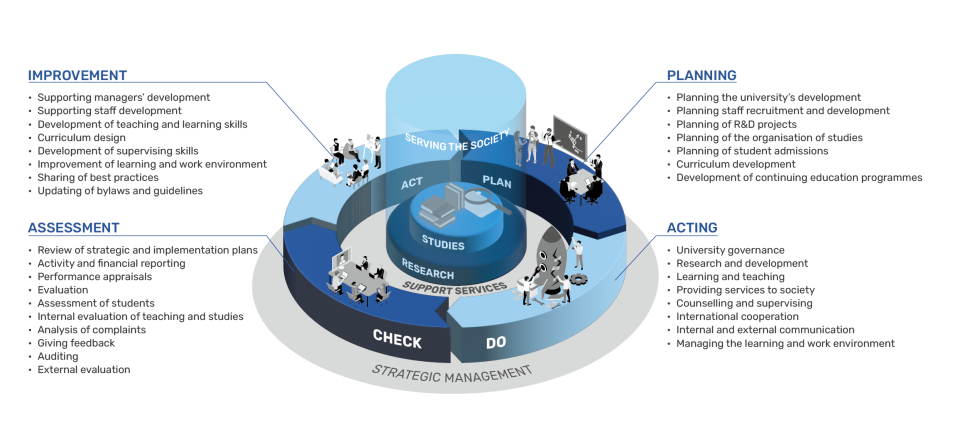
University’s management and quality cycle: annual cycle
The University of Tartu’s management and quality management are linked in an annual cycle, ensuring that the university’s development is guided in an evidence-based and consistent manner.
The annual cycle integrates strategic planning, the preparation of action plans, budgeting, performance evaluation and improvement activities into a single system.
Each year
- the results of the previous period are assessed and new objectives are set,
- activities and the allocation of resources are planned,
- development and quality activities are carried out,
- an analysis is conducted, the results of which serve as the basis for the next planning cycle.
The annual cycle is a practical application of the cycle of continuous improvement at the university’s management level. It supports the implementation of the University of Tartu’s Strategic Plan for 2026–2035.

