


Supervisors and topics
On this page, you will find an overview of postdoctoral fellowship offers from the research groups at the University of Tartu. For more detailed information, click on the topic.
Faculty of Science and Technology
Postdoctoral position to research aerosol-cloud interactions
Anthropogenic climate change is a tug-of-war between greenhouse gas warming and aerosol cooling. Moreover, the impact of anthropogenic aerosols on clouds is the most uncertain driver of climate change.
We use satellite remote sensing to study cloud responses to aerosols at anthropogenic aerosol hot spots. We research aerosol impacts on liquid–water clouds (Toll et al 2019 Nature) and the ability of anthropogenic aerosols to serve as seeds for ice formation (Toll et al 2024 Science).
Interested postdoctoral researchers have the opportunity to participate actively in the activities of the research group and work together with our international collaborators. Ongoing projects include ERC-funded project CloudTracker (Tracking Polluted Clouds: the Plausibility of a Strong Aerosol Cooling Effect on Earth’s Climate) and Estonian Research Council funded project NaturalExp (Natural Experiments to Constrain Anthropogenic Aerosol Forcing of Earth’s Climate).
Profile of the supervisor Velle Toll, Professor of Climate Physics
Webpage of the Centre of Climate Research
Membrane protrusion networks in tissue morphogenesis and homeostasis
Three-dimensional tissue architecture depends on a series of transient, precisely coordinated cell-cell interactions that drive growth, signalling, and pattern formation. Our recent identification of the Interplanar Amida Network (IPAN) in the Drosophila pupal wing, a dynamic lattice of vertical and lateral membrane protrusions, uncovers a previously unrecognised mechanism that synchronises cell-cycle transitions and interplanar communication during morphogenesis. Building on this foundation, the project will examine whether tunnelling nanotube (TNT)-like structures operate as a conserved mode of communication in both healthy epithelia and in the earliest stages of neoplastic change.
Using advanced in vivo imaging of the pupal wing, together with an ex vivo wing imaginal disc model of apicobasal polarity loss (scribble-deficient tissue), the project will address TNT dynamics, quantify organelle and signalling complex trafficking, and assess corresponding transcriptional responses. A central aim is to determine how TNT/IPAN activity integrates BMP signalling with G2-phase progression and proliferation during normal development, and how TNT-mediated exchanges between wild-type and polarity-compromised cells influence epithelial integrity and growth control.
The project will further identify conserved and context-specific molecular regulators that govern TNT formation, stability, and cargo transport. Collectively, these studies will establish mechanistic principles of TNT-dependent communication in three-dimensional epithelia and inform strategies for selectively disrupting pathological TNT activity in cancer, fibrosis, and regenerative medicine.
Key references:
- Tran, N.V., Montanari, M.P., Gui, J., Lubenets, D., Fischbach, L.L., Antson, H., Huang, Y., Brutus, E., Okada, Y., Ishimoto, Y., Tõnissoo, T. and Shimmi, O. (2024). Programmed disassembly of a microtubule-based membrane protrusion network coordinates 3D epithelial morphogenesis in Drosophila. EMBO J. 43(4): 568-594.
- Huang, Y., Gui, J., Myllymäki, S.M., Mikkola, M.L. and Shimmi O. (2023). Coordination of tissue homeostasis and growth by the Scribble-α-Catenin-Septate junction complex. iScience. 26(4):106490.
- Gui, J., Huang, Y., Montanari, M., Toddie-Moore, D., Kikushima, K., Nix, S., Ishimoto, Y. and Shimmi, O. (2019). Coupling between dynamic 3D tissue architecture and BMP morphogen signaling during Drosophila wing morphogenesis. Proc. Natl. Acad. Sci. U.S.A. 116, 4352-4361.
Postdoctoral position in single-cell genomics and developmental neurobiology
Research Group for Developmental Genetics and Neurobiology investigates the development and evolution of the mammalian cerebellum, a relatively understudied brain region that contains the majority of neurons in the mammalian brain. The cerebellum expanded in parallel with the neocortex during human evolution and is increasingly implicated in neurodevelopmental disorders.
The team aims to understand how genetic variation shapes cerebellar development by dissecting its phenotypic consequences at the cellular level. A central research focus is the study of genes associated with autism spectrum disorders, with the goal of uncovering the neurodevelopmental mechanisms linking cerebellar dysfunction to autism. To achieve this, we combine single-cell genomics, mouse models, and human iPSC-derived organoids to enable multimodal characterization of disease-associated cellular phenotypes. We will apply a similar framework to investigate how evolutionary changes in gene expression programs contribute to human-specific traits. Through these efforts, our lab seeks to elucidate how genetic differences drive both the emergence of uniquely human brain features and the origins of neurodevelopmental disease.
The research is supported by the Simons Foundation, EMBO, and the Estonian Research Council.
Researchers with an interest in experimental, computational, or combined postdoctoral projects are encouraged to apply.
Further reading:
- Yamada T, Sarropoulos I, Sepp M. Evolutionary perspectives on the development of the mammalian cerebellum: From cellular diversity to gene regulatory programs. Current Topics in Developmental Biology. 2026 Feb; doi.org/10.1016/bs.ctdb.2026.01.010 (Review)
- Sarropoulos I*, Sepp M*, Yamada T* et al. The evolution of gene regulation in mammalian cerebellum development. Science. 2026 Jan; eadw9154
- Sepp M*, Leiss K*, et al. Cellular development and evolution of the mammalian cerebellum. Nature. 2024 Jan; 625(7996):788-796
Sarropoulos I*, Sepp M*, et al. Developmental and evolutionary dynamics of cis-regulatory elements in mouse cerebellar cells. Science. 2021 Aug; 373(6558):eabg4696
Profile of the supervisor, Associate Professor Mari Sepp
Faculty of Medicine
Unexplained male infertility: discovery study for novel genes implicated in reproductive success
Every 10th man is affected by infertility. Over half of these cases remain unexplained, hindering optimal counselling and management of couples seeking for medical assistance to achieve parenthood. It is hypothesized that a substantial fraction of involuntary childlessness is caused by unknown genetic factors. This ambitious postdoctoral research project aims at hypothesis-free discovery of novel genetic aetiologies of impaired male gonadal development and function. Its is built on the whole exome and genome sequencing (WGS) data generated for over 1,000 ESTonian ANDrology (ESTAND) cohort participants. The outcomes will be significant to individual patients, reproductive medicine, and overall society worldwide.
Profile of the supervisor Maris Laan, Professor in Human Genetics
Faculty of Arts and Humanities
The research project “Imagination in Cognition: Contemporary and Ancient Perspectives” aims to give a comparative analysis of the cognitive roles of imagination by bringing into dialogue contemporary empirically informed philosophy of mind and Ancient Greek views on imagination.
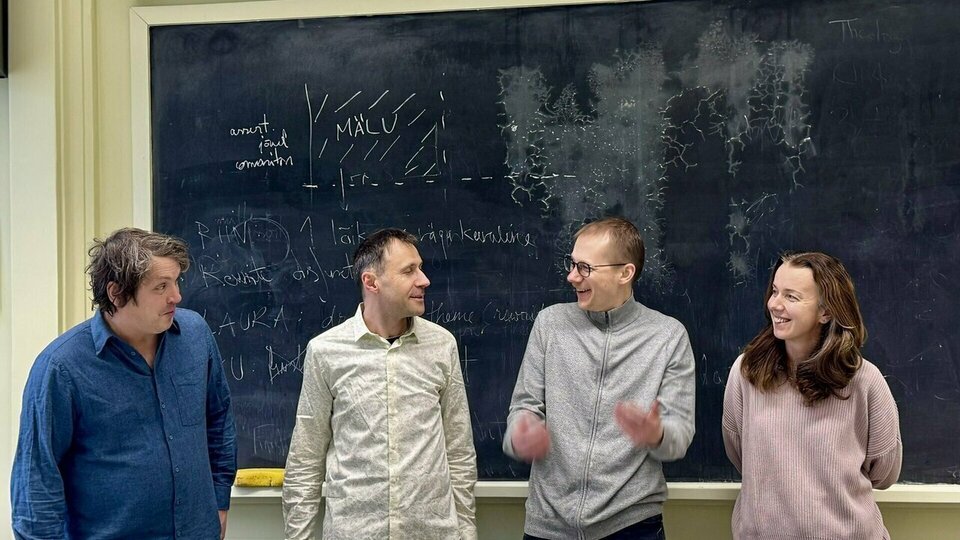
The four members of the research group (Associate Professor of Theoretical Philosophy Uku Tooming, Associate Professor of History of Philosophy Roomet Jakapi, Research Fellow in History of Philosophy Toomas Lott, Associate Professor of Ancient Philosophy Riin Sirkel) have characterised themselves as friendly and collegial with expertise in contemporary philosophy of mind and Ancient Greek and Roman philosophy:
“We are looking for postdoctoral candidates whose research concerns imagination in contemporary philosophy and/or Ancient Greek philosophy. An ideal candidate would be a philosopher who is interested in bringing contemporary and Ancient philosophy into mutually beneficial dialogue. In the context of our project, the candidate's research could focus on analysing the structure of imagination and its content (in contrast with the structure and content of perception and thought) or on analysing some specific cognitive role of imagination in contemporary and/or Ancient philosophy.”
The candidate is expected to:
- contribute to the research project in the form of high-level publications;
- regularly participate in the activities of the research group;
- demonstrate excellent English skills;
- exhibit openness to diverse intellectual traditions.
Professor of Philosophy of Mind Bruno Mölder from the Chair of Theoretical Philosophy is seeking a postdoctoral researcher.
Topics of research and supervision
Philosophy of mind in general and in particular:
• Interpretivism in philosophy of mind
• Large language models and philosophy of mind
• Experience of time and the metaphysics of time
Toward Moral Competence: Integrating Ethical Theory and Empirical Insights for Better Ethics Education
One of our emerging research themes focuses on moral competence: developing a philosophically rigorous and empirically informed understanding of ethical decision-making and its implications for ethics teaching. The theme brings together work in normative ethics, metaethics, moral psychology, and philosophy of education, with particular attention to professional and higher education contexts.
We are especially interested in candidates whose research engages with topics such as moral reasoning and emotion, moral expertise, ethical decision-making under uncertainty, or the integration of empirical insights into normative theory and applied ethics.
Prospective applicants should hold a PhD in philosophy or a closely related field and demonstrate strong research potential. We welcome scholars interested in interdisciplinary collaboration and in bridging ethical theory with educational practice.
For informal inquiries about aligning your project with this research theme, please contact Prof. Kadri Simm.
Profile of professor Kadri Simm
How contextual and institutional factors shape the interpretation of rules
Many of the texts that govern how people do their jobs — laws, regulations, standards, procedural definitions — are expressed in language that admits of more than one interpretation. How do people resolve this ambiguity in practice? Experimental jurisprudence has investigated this question by comparing ordinary citizens with legal professionals such as judges and lawyers. But many rules are interpreted by people who are neither — contractors, administrators, compliance officers — whose understanding of what the rules require is shaped by the organizational roles they occupy.
The MetaContext Project is an interdisciplinary research project investigating how contextual factors stemming from job roles shape the interpretation of regulatory and procedural language. We use qualitative methods — including interviews with people who apply rules in their work — to develop hypotheses about factors influencing interpretation, and then test those hypotheses experimentally.
We are looking for a postdoctoral researcher to join us in extending this research to new domains. The position offers the opportunity to work on foundational questions in philosophy of language — about semantic underdetermination, context, and successful communication — in settings where they have practical stakes.
Relevant backgrounds include experimental philosophy, philosophy of language, empirical legal studies, organizational economics, behavioural economics, cognitive science, or organizational behaviour.
Profile of supervisor Alex Davies, Associate Professor of Philosophy of Language
Profile of supervisor Kurmet Kivipõld, Associate Professor of Management
