

Disinformation and Societal Resilience
Master's
2 January
15 March
30 April
1 September
- The master's programme in Disinformation and Societal Resilience is for professionals who need to understand information manipulations in the global context, work on strategic communication to build social resilience and deal with risk management in organisations and communities.
- The programme combines systematic theoretical knowledge with a practical approach that connects students to their realities and focuses on the disinformation problems in their countries.
- Unique experiences from scholars and practitioners brought into the programme help build the international network of professionals to combat disinformation effectively.
- Up to 10 tuition waivers are provided to candidates from Albania, Armenia, Azerbaijan, Bosnia and Herzegovina, Georgia, Kazakhstan, Kyrgyz Republic, Moldova, Montenegro, North Macedonia, Serbia, Tajikistan, Turkmenistan, Ukraine, Uzbekistan, (exiled people of) Belarus, and Estonia. Applying for the initially proposed monthly stipend and travel allowance has been suspended. Candidates should be aware that additional stipends will not be available.
In response to the growing threat of misinformation and hostile information operations, the University of Tartu Institute of Social Studies presents a one-year master's programme dedicated to training specialists with interdisciplinary expertise in combating disinformation. This programme is tailored for students from countries often targeted by information manipulation and malicious misinformation.
Estonia, situated on the eastern border of the European Union, has experienced repeated challenges to its societal resilience due to information manipulations and hostile narratives. In response, the country has developed smart digital solutions, high levels of media and information literacy, and transparent decision-making processes. Our master's programme provides a unique opportunity to learn from these efforts, bringing together academic knowledge and practical experiences from within and outside the country.
The programme leverages cutting-edge research in communication, law, psychology, sociology, data science, and regional studies to enhance societal resilience across Europe, Eurasia, and Central Asia. Students will delve into the impacts of disinformation, explore different dimensions of societal resilience, and identify sources of vulnerability. Students contribute to a holistic understanding of the problem and its regional solutions through country-based practical projects. Moreover, this journey will connect students with an international professional network actively engaged in combating disinformation daily.
Read more about the programme from its information sheet here (pdf).
Programme highlights in media
- Watch here an info session dedicated to the MA in Disinformation and Societal resilience international degree programme where Maria Murumaa-Mengel and the programme director Maia Klassen offer insights into the programme's curriculum, opportunities, and the learning environment (Virtual Open Day 2024).
The master's programme in Disinformation and Societal Resilience aims to equip professionals with essential and adaptable knowledge in communication, sociology, data sciences, regional studies, law, and psychology. Students will learn to analyse information processes and make policy recommendations to effectively combat disinformation while actively contributing to the strengthening of societal resilience.
Curriculum version:
More info: Study Information System
Institute of Social Studies
The Institute of Social Studies has developed into a centre of competence, specialising in research across three main subject clusters: journalism and communication; sociology, social work, and social policy; and information sciences. As one of the largest institutes in the field of social sciences at the University of Tartu, it collaborates closely with economists, education researchers, political scientists, psychologists, and experts from both the humanities and natural sciences. In addition to in-depth expertise in its disciplines, the institute values interdisciplinarity, academic rigour, and diversity.
Read more about the Institute of Social Studies here.

Visit us virtually
Explore Tartu, the Institute of Social Studies, and student dormitories through the university's virtual tour here.
The programme is designed for specialists for whom the issue of building and maintaining societal resilience in the face of disruptive processes within our information sphere is a matter of professional necessity. The skills and knowledge gained during the year at the Institute of Social Studies will enable graduates to apply evidence-based strategies in their respective fields for the next decade.
Upon completion, graduates will be awarded a Master of Arts in Social Sciences (Disinformation and Societal Resilience) and will find career opportunities in the public and third sectors. This includes positions in public institutions, agencies, and NGOs, specialising in strategic communication, policy analysis, impact assessment, cyber security, media and information literacy through formal or non-formal education, and more. As the field of strengthening democracies against disinformation continues to evolve, new and unforeseen career paths emerge each year.
To enhance practical skills, the programme offers a four-week internship with our partner organisations actively combating information disorders. Through these internships, students gain firsthand knowledge of working processes and expand their professional network, providing invaluable connections for future work in the field.
Admission requirements for Disinformation and Societal Resilience
- 1) bachelor’s degree or equivalent qualification and at least 5 years of professional experience or
2) master´s degree or equivalent qualification – please see our country-specific document requirements - English language proficiency – please see our acceptable tests and exempt categories
NB! The restrictions for the citizens of the Russian Federation are specified here.
Applications are evaluated based on
- the score of the motivation letter (yields 50% of the final score)
- the admission interview (yields 50% of the final score)
The motivation letter (in English, 700-1000 words) explains the candidate’s motivation to study in the programme and reflects on previous experience in the field. The letter of motivation may be accompanied by a letter of recommendation (not mandatory) from a representative of your organisation, a partner organisation or a national authority, for which a maximum of 5 additional points may be awarded.
Cover letter components:
- What are the candidate’s qualifications and motivation to enter the programme? (Give a short overview of your work experience and/or disinformation-related challenges encountered.)
- What is the problem the candidate wants to solve, and why? How does the candidate intend to practically apply the competencies acquired in the programme in the future (e.g., in a specific job, organisation, community)? How will the candidate’s studies benefit the candidate’s native country or local community?
- Which stakeholders will help the candidate to solve the central problem of his/her motivation letter? Visualize the relevant stakeholders who should be involved in solving the candidate’s problem.
Drawing, sketch or visualisation, up to half an A4 has to be uploaded as a separate file in your DreamApply application. - How does the candidate assess his/her general and professional competencies (oral and written communication skills in English, ability to find and read academic texts, teamwork skills, online collaboration skills, ability to create audio-visual materials, international collaboration skills, experience in social science research, data analysis and interpretation skills)? When evaluating their competencies, please provide examples of their application and an assessment of whether they are excellent, good, satisfactory or insufficient. Candidates do not need to be experienced or competent in all of the above – the self-assessment will help us to plan support seminars.
Evaluation of the letter:
The motivation letter will provide an insight into the candidate’s professional readiness and motivation to study in the programme. The motivation letter will be assessed based on the following criteria in a 100-point system:
- Relevance of previous studies and professional profile (20p);
- Thoroughness of the reasoning behind the professional problem and solution and the meaningfulness of the mapping of the parties in the diagram (20p);
- Ability to reflect on own learning motivation and needs (20p);
- The benefits of learning for the learner and society (20p);
- Coherence, logical structure and argumentation of the motivation letter (20p);
Using ChatGPT to generate the motivation letter is forbidden. We check the use of AI and will disqualify candidates whose work is flagged as created by AI. To be admitted to the interview, the motivation letter must score 51 out of 100 points.
The admission interview will take place on April 8, 2025, with the admissions committee and will aim to assess:
- the professional motivation of the candidate in an exchange of views;
- the candidate’s analytical, reasoning and reflection skills;
- professional competences (expression and presentation, ability to apply the competences acquired);
- awareness of social issues and ethical sensitivity.
The interview will last up to 30 minutes and will be conducted online via Zoom.
Evaluation of the interview
The interview will be assessed on a 100-point system based on the following criteria:
- motivation to study and work in the field (20p);
- motivation and motivation to work and study in the field (20p);
- ability to analyse, reason and generalise (20p);
- ability to apply creativity and problem-solving (20p);
- professional prerequisites (expressive and presentational skills, coping under pressure, etc.) (20p).
To pass the admission interview, a score of 51/100 points is needed.
General information regarding the online admission interview
The University of Tartu uses different video communication programmes to conduct an online interview (Microsoft Teams, Zoom, Skype, Big Blue Button). The admissions committee will notify you, which software programme will be used and when does the interview take place.
The applicant needs the following for the online interview:
- a computer or smart device. The computer or smart device must have a web camera, earphones and microphone (built-in or separate). As the applicant must be visually identified at the interview, the use of the web camera is mandatory, not recommended.
- The internet connection with a speed of at least 1 Mb/s (upload/download) is recommended for the video call.
At the online interview:
- the applicant must have an identity document;
- the applicant has to ensure that the room where they stay is free from other persons or background noise;
- the applicant must take into account that they are not allowed to save the interview.
For each assignment, the maximum score is 100 points and minimum score 51 points to be considered for admission. The applicant needs to receive at least 51 points for the motivation letter, in order to qualify for the admission interview. After the interview, the final admission score is calculated. The total admission score will be the weighted sum of the score of the motivation letter and the interview. The maximum number of final points is 100. Only applications which receive 66 points and above as a combined score from both indicators will qualify for admission.
Further information on assessing candidates´ academic performance and calculating admissions´ score.
The decision about granting a tuition waiver is made based on the motivation letter, the interview and the need for financial support described by the candidate in the application. Also, to be considered for the tuition waiver, the cumulative score of the admissions process must be at least 80 points.
How to apply
The following information applies to international students and Estonian students who graduated abroad:
The application system opens on 2 January and closes on 15 March. The following documents must be submitted electronically via DreamApply by 15 March:
- online application
- motivation letter
- official certified copies of bachelor's or master's diplomas and diploma supplements (bachelor's and master's transcript/mark sheet, including the description of the grading scale) in the original language. Please read our country-specific requirements for submitting your educational documents.
- official translations of the bachelor’s and master's diplomas and diploma supplements (transcripts) into English, translation certified.
- proof of English language proficiency
- copy of the passport page stating the applicant’s personal particulars
- confirmation/receipt of application fee payment (if applicable). All international applicants are required to pay the application fee EUR 100, unless they have completed the previous study level in Estonia. An application will only be processed after the fee has been received by the UT
- curriculum vitae
Submitted applications can not be edited. It is only possible to upload new documents (e.g. graduation certificates). Applicants will receive feedback and notifications through the DreamApply system to their e-mail. Incomplete applications or those submitted by e-mail will not be considered for admission.
Guide to submitting an electronic application on DreamApply.
NB: The University of Tartu has no official partnerships with agents or educational representatives. We strongly recommend applying directly to the university without the help of unauthorised third-party entities. Should you use such a service, please ensure that your application's contact information is your personal details (your e-mail, phone number, etc.).
The evaluation of applications will be made based on the electronic copies added to DreamApply. A general ranking list will be formed based on the electronically submitted applications and admission results (including offers) will be announced to all applicants personally via DreamApply by April 30 at the latest. Admitted candidates are expected to accept or decline the offer in DreamApply in 7 days. If the decision is not communicated to UT via DreamApply by the stipulated deadline, UT reserves the right to withdraw the admission offer.
NB! It is not possible to postpone the beginning of studies to the next academic year.
Terms and conditions of the admission offer
Admission offers are conditional. This means that there are conditions in the offer which the applicant needs to fulfil in order to be admitted (e.g. sending application documents by post; obtaining the required level of education). If the conditions are not met, UT has the right to withdraw the offer. Also, UT reserves the right to withdraw or amend any offer or revoke the matriculation of a student, if it becomes evident that the application contains fraudulent information, the qualification does not provide access to the chosen study programme or the student is found to have omitted key information from the application. Should such circumstances occur, UT will not be liable for any material or immaterial loss which the student may suffer as a result.
Once the admission results have been announced, all admitted students are required to send the application documents by post to: Student Admissions, University of Tartu, Ülikooli 18-133, Tartu 50090, ESTONIA.
The documents are expected to be mailed only by those receiving the admission offer (unless instructed otherwise by the admissions staff). The documents must reach the university within 3 weeks from the announcement of the offer. If the application documents do not reach us by the deadline, the university has the right to withdraw the admission offer. Applicants will be informed when their documents have arrived.
Requirements for educational documents
All copies of educational documents (diplomas and Diploma Supplements/transcripts) must be officially certified. By certified we mean that the copies should bear an original signature and seal of the authority certifying that these are true copies of the original document(s). The copies can be certified either 1) by an authorised official of the issuing institution, or 2) by a notary, or 3) with an Apostille attached. NB! Country-specific requirements may also specify the way documents from certain countries must be certified.
Please note that UT does not accept simple copies made on the basis of already certified copies (primary copies are needed).
Paying the tuition fee (applicable to those receiving a fee-based study place offer)
- EU/EEA/Swiss citizens are required to pay the fee for the first semester by 20 September at the latest after signing the fee contract, please read more here.
- Admitted students from other countries are required to pre-pay half of the first semester's tuition fee. The invoice along with the pre-payment deadline and payment details will be sent to applicants via DreamApply after they have accepted the admissions offer and the University has received the hard copies of the application documents. Second part of the fee is due on 20 September. NB! The official admission letter (necessary for visa application) will only be issued once the University of Tartu has received the pre-payment.
- By transferring the pre-payment to the university, you confirm that you have informed yourself about the process of the visa application and you are able to arrive in Estonia by the start of the academic year. If you have any questions please contact studentvisasupport@ut.ee.
The official admission letter will be sent to admitted students electronically via DreamApply only after the admissions office has received and reviewed hard copies of the application documents, and received the tuition fee pre-payment (if a pre-payment was required, please see step 3 for more details).
NB! The electronic admission letter is also sufficient for non-EU students for applying for visa at an Estonian embassy.
Once the admission letter is issued, accepted students may proceed further with arranging their arrival. All non-EU students should first consult information on the process of visa and temporary residence permit application to be sure, as where and when the relevant documents need to be applied.
NB! Admitted students who are not citizens of an EU or EEA country or Switzerland need to make sure they obtain the Estonian long-term visa on time in order to be able to participate in the orientation programme for international students held in the last week of August. They are also required to visit the Admissions Office in person to complete their arrival registration by September 1, 2025, at the latest. Failure to do so will result in the revocation of their admission decision and visa.
Note that housing at the UT dormitories can be applied during a limited period of time, unless specified otherwise on the website. For housing alternatives please find further information on Tartu Welcome Centre website.
Travel information can be found here.
Based upon common queries, the most important information has been summarised into a pre-arrival information website UT Getting Started.
Estonian applicants should apply via National Admission Information Systems (SAIS). Further information in Estonian is available here.
Contacts
Ask about the admission requirements and application process

Find out what awaits you at UniTartu

Join info events
Learn more about the university and its study programmes by attending our info events for future students. Our staff also attends international fairs and info sessions.
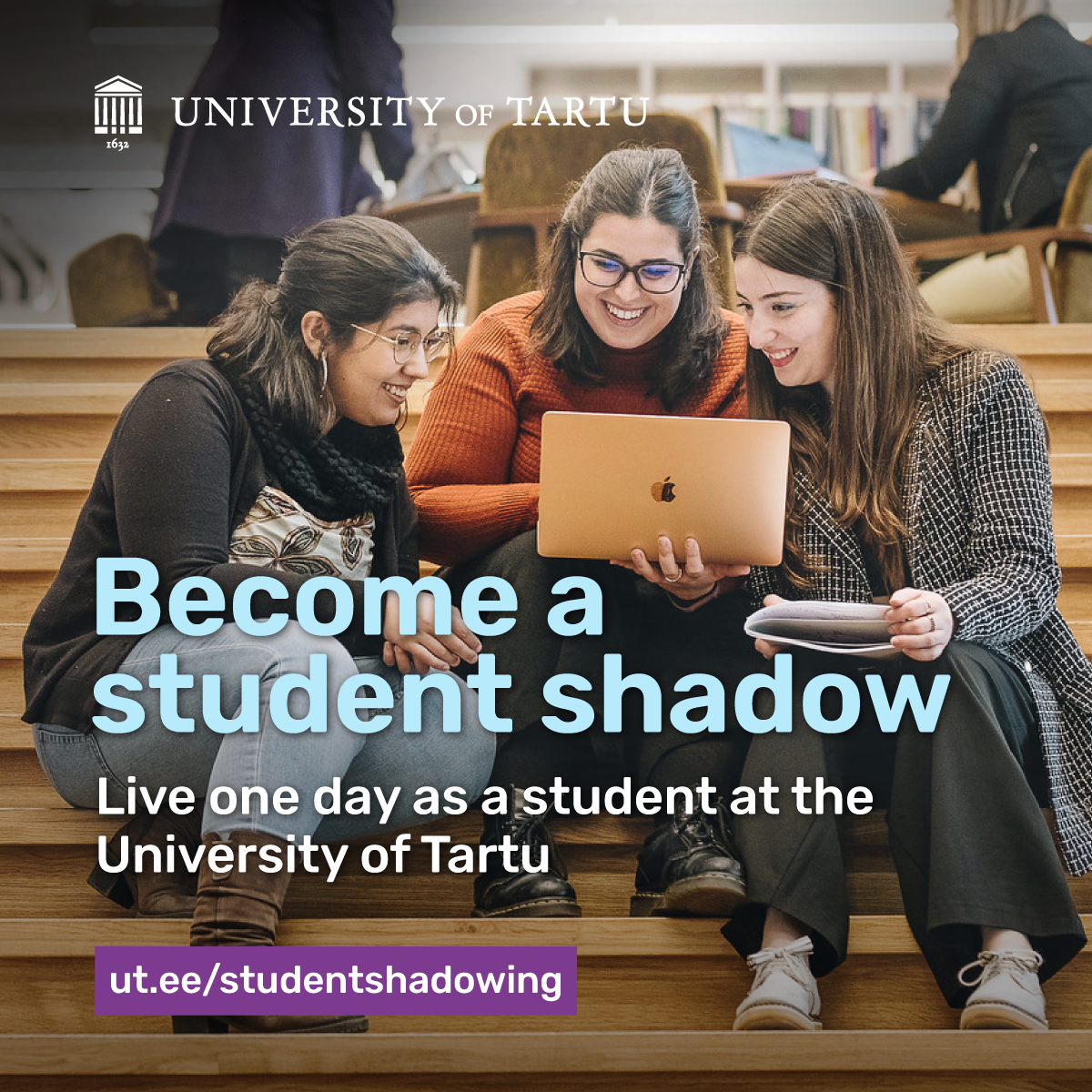
Spend a day as a student
During the academic year, you can spend a day with a current student in your field of interest, giving you a firsthand look at student life and the University of Tartu.
Listen to the podcast
The "Tiksu to UniTartu - Podcast for International Students" covers topics such as housing, student organisations, healthcare, etc.

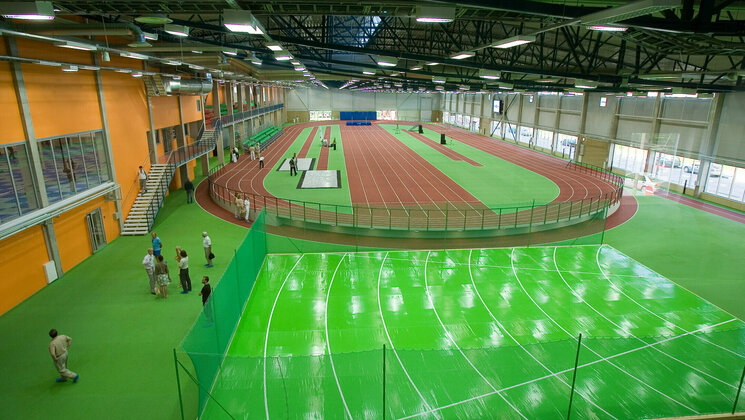
Visit the campus
Visiting the campus gives you a great understanding of what it would be like to study here. You can visit us throughout the year.



07.02.2025
