

Robotics and Computer Engineering
Master's
2 January
15 March
30 April
31 August
Admission deadlines, admission requirements, and descriptions of the entrance examinations for the 2027 intake will be added to the website by the end of December.
- The University of Tartu is ranked among the top 350 universities in the world.
- Study here to become a highly qualified roboticist, computer and space engineer.
- You can join the student satellite team and shape the future of space exploration. ESTCube-1, designed by our staff and students, was launched in 2013, making Estonia the 41st space nation in the world. The second one was launched in 2023.
- You will gain invaluable work experience within a research group or at a leading enterprise, either in Estonia or internationally.
- You can participate in the robot football competition RoboCup SPL, robotics competition Robotex, student satellite project and Science Bus club.
- After graduation, you can set up your own technology company or work in an enterprise or a research centre connected to your field of study.
The master's programme in Robotics and Computer Engineering trains highly qualified roboticists, computer and space engineers. The programme provides broad knowledge in robotics, computer engineering or space technology. Graduates can work in enterprises or research and development centres connected to their field of study.
People are surrounded by devices that combine electronics and informatics. The master's programme focuses on the development of high-tech systems and equipment. It combines both hardware and software. The three main specialisation areas are computers, robots and space technology.
The University of Tartu researchers have developed a variety of innovative devices, including a robotics mannequin that allows people to choose clothes online that fit them, an artificial muscle used in manufacturing artificial limbs and robots, and an underwater robot. These are just a few projects of our Intelligent Materials and Systems Laboratory (IMS Lab).
ESTCube-1 was the first Estonian satellite built by students from the University of Tartu, the Estonian Aviation Academy, TalTech, and the Estonian University of Life Sciences. Its mission ended in 2015; however, the second one is currently being built. The University of Tartu student-led robot football team has participated in the robot football competition RoboCup SPL.
Students in the Robotics and Computer Engineering programme can also engage in a variety of student-led engineering projects that allow them to apply their theoretical knowledge in real-world development. One of the most innovative initiatives is SemuBot – a student organisation building Estonia’s first humanoid companion robot, capable of movement, interaction and communication in Estonian. The interdisciplinary team includes students of electronics, mechanics, design, medicine, economics and computer engineering, working together to create a robot that can support care homes, hospitals, children’s speech therapy and various service sectors.
Students also contribute to other large-scale national technology projects. In Solaride, they helped develop the next-generation solar car for the 2025 Bridgestone World Solar Challenge, gaining experience in sustainable engineering and innovation. Through the KuupKulgur mission, students participate in creating Estonia’s first lunar rover platform designed to carry diverse scientific payloads to the Moon’s surface.
Intersectoral programme in Engineering
Robotics and Computer Engineering students have the opportunity to apply for the Intersectoral programme in Engineering during the spring semester of their first year. The programme combines academic studies with practical work experience in a company. If selected, you will spend part of your second study year at one of the University of Tartu’s partner companies, where you can apply your knowledge in a real-world environment and solve engineering challenges relevant to the company. The collaboration culminates in writing your master’s thesis on a topic important to the partner organisation.
Students participating in the programme receive a monthly scholarship of 1000 euros, allowing them to focus on learning and professional growth. The Intersectoral programme in Engineering enriches your studies by providing valuable practical experience and the opportunity to build strong professional connections with industry partners already during your studies.

EITM Master School
The master's programme in Robotics and Computer Engineering is a part of the EIT Manufacturing Master School. You can apply to the University of Tartu and complete your studies only in Tartu, or apply directly to the EITM Master School and study for a year in Tartu and another year at a partner university.
What is EIT Manufacturing?
EIT Manufacturing is an Innovation Community within the European Institute of Innovation & Technology, connecting the leading manufacturing actors in Europe. Fuelled by a strong interdisciplinary and trusted community, it adds unique value to European products, processes, and services – and inspires the creation of globally competitive and sustainable manufacturing.
Image

| Image

| Image

|
EITM Master School
The EIT Manufacturing programme aims to attract and empower top talents to further empower them through mobility and other learning opportunities to become leading innovators and entrepreneurs in manufacturing. The EITM master's programme is one of the main assets of the EIT Manufacturing innovation communities, spreading innovation and creating new business in the manufacturing ecosystem.
Students move from their entry university at the end of the first year to their exit university in a different country for the second year. Throughout the studies, the language of instruction is English.
Graduates of the EITM programme are awarded two master's degrees -- one from each university. An EIT Label certificate is conferred on participants who have followed one of the five programmes (with international mobility), taken part in the Innovation and Entrepreneurship courses (in particular the summer school) and completed an internship in industry.
The EITM master's programme combines technical competence with skills in innovation and entrepreneurship, adopting a learning-by-doing approach. Students follow one of five programmes (with international mobility):
- People and Robots for Sustainable Work
- Additive Manufacturing for Full Flexibility
- Zero Defect Manufacture for a Circular Economy
- Platforms for Digitalised Value Networks
- Data Science and AI for Competitive Manufacturing
The master's programme in Robotics and Computer Engineering is involved in the "People and Robots for Sustainable Work" programme, which combines manufacturing science, robotics system physics and control system automation, including the design of customised manufacturing processes and production management.
Extracurricular activities
Students have the opportunity to participate in the annual robotics competition, Robotex, where they can compete against teams from other universities in Estonia and abroad. The University of Tartu also has a robotics club. Additionally, students can participate in the student satellite project, the Estonian first humanoid robot project, and the Science Bus (Teadusbuss), which offers students an excellent opportunity to showcase exciting science experiments and meet new people.
Designing Social Robots for Human Interaction summer course
A great way to get to know the university and the city of Tartu is to take part in the UniTartu Summer School, which takes place during the first two weeks of August. In 2026, we are offering the Designing Social Robots for Human Interaction course, which provides an in-depth exploration of social robotics — a branch of robotics focused on the design, development, and study of robots that interact and communicate with humans or other robots in socially meaningful ways. The course is suitable for upper secondary bachelor's, master's and doctoral students. Please note that the summer course has a separate application process and participation fee, and applying for the summer school is independent of applying for the master’s programme.

Programme highlights in media
- Video: Student Admissions talks about master's admissions for 2026, and International Student Ambassadors share tips on living in Estonia as an international student (Virtual Open Day 2026)
- Video: Programme director talks about the master's programme in Robotics and Computer Engineering (Virtual Open Day 2024)
- Video: Programme director introduces the master's programme in Robotics and Computer Engineering (Online Open Doors Week 2022)
- Video: Master's students in IT discuss studying at the University of Tartu (Online Open Doors Week 2022)
- Video: Alumni Talks: Advancing robotics and space technology towards terrestrial and extra-terrestrial exploration by Aditya Savio Paul (MSc in Robotics and Computer Engineering)
Curriculum version:2026/2027
More info: Study Information System
Institute of Technology
The Institute of Technology is a multidisciplinary research institution that unites computer engineering, robotics, electronics, materials science, biosciences, and environmental technologies. Our students have a broad opportunity to work with scientists, creating novel solutions in all fields. Practical courses allow students to gain the necessary skills to work in industry during and after their studies.
The scientific work of our institute focuses on six main areas: biomedical technologies, environmental technologies, systems and synthetic biology, intelligent materials and systems, intelligent computer vision, and materials in extreme environments.
Visit us virtually
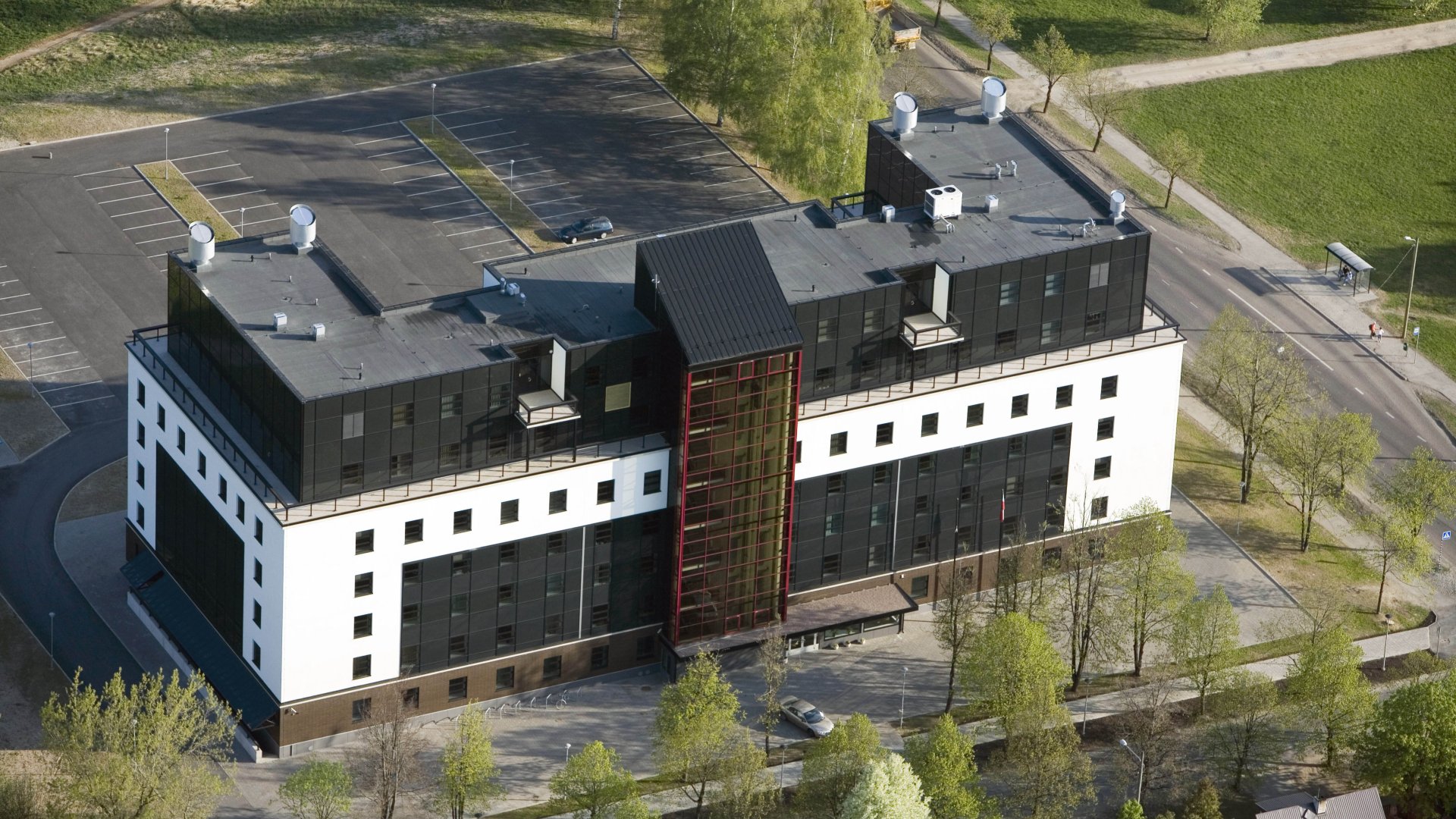
The University of Tartu Institute of Technology is primarily located in Nooruse 1 building on the Maarjavälja science campus, next to the Physicum study building, which the institute also uses. The institute also has sections in the University of Tartu Delta Centre.
Explore Tartu, the Institute of Technology, and student dormitories through the university's virtual tour.
Graduates of the Robotics and Computer Engineering master’s programme find employment in high-tech companies, telecommunications and computer firms, software enterprises, space technology companies, and public administration. The high-level English-language education also opens doors to international career opportunities.
Our alumni work in various positions, including software engineers, software developers, autonomous vehicle development managers, project managers, electronics and hardware engineers, and other roles in the technology sector.
Robotics and Computer Engineering students have found employment at companies such as Starship Technologies, Milrem Robotics, Clevon, Bolt, Hedgehog, Auve Tech, Veriff, Atemix Industrial Automation, Fractory, LHV, Siemens, Torm Metall, and many others.
Specialists in robotics, computer engineering, or space technology are also encouraged to continue their studies in the doctoral programmes in engineering and technology, physics, or informatics at the University of Tartu.
Read our students’ and alumni stories about studying Robotics and Computer Engineering and their career paths after graduation on the Institute of Technology blog.

Admission requirements for Robotics and Computer Engineering
- bachelor’s degree or equivalent qualification in information technology, electrical and electronic engineering, computer science, mechanic engineering, software engineering, computer engineering, information systems or a related field – please see our country-specific document requirements.
NB! Even if you graduate from Bachelor's studies only in the summer, you can still apply in the spring. If you are admitted, you are required to provide proof of your bachelor’s degree by 10 July if you graduate from a university in Estonia, and by 31 July if you graduate abroad.
- prerequisite courses
You can apply if you have graduated from one of the following programmes:
- University of Tartu: Computer Engineering (83866), Computer Science (2476), Science and Technology (144918), Physics, Chemistry and Material Science (144301)
- TalTech: Computer Science (175317), IT Systems Administration (175301), IT Systems Development (175303), Cyber Security Engineering (175303), Hardware Development and Programming (175717), Electrical Power Engineering and Mechatronics (167217), Mechatronics (1975), Product Development and Robotics (165597), Integrated Engineering (126337)
- Estonian University of Life Sciences: Engineering (384), Technotronics (81050)
- Estonian Aviation Academy: Aeronautical Engineering (194140)
- Estonian Entrepreneurship University of Applied Sciences: Robotics Software Development (207866)
Graduates of other programmes in Estonia and abroad can apply if they meet requirement of prerequisite courses in the following fields in a total value of 45 ECTS:
- higher mathematics (6 ECTS), physics (6 ECTS), programming (6 ECTS) and computer hardware (3 ECTS);
- courses in electronics, computer engineering, computer technology or informatics (for the minimum value of 24 ECTS);
In addition to the prerequisites, applicants are expected to take the online entry test.
English language proficiency – please see our acceptable tests and exempt categories.
NB! The restrictions for the citizens of the Russian Federation are specified here.
Applications are evaluated based on
- the score of the motivation letter (yields 60% of the final score)
average grade of the previous study level or entry test (yields 40% of the final score)*
*If you have graduated from a programme listed above, your rank is calculated based on the motivation letter and the average grade in previous studies. You can, however, also take the entry test - in that case the best score will be considered.
If you have graduated elsewhere and meet the prerequisite requirement, you need to take the entry test. In that case, your rank is calculated based on the motivation letter score and the score of the entry test. You qualify for the entry test only if your motivation letter collects at least 51 points.
Please write a brief motivation letter (in English, maximum of 2000 characters with spaces) based on the following points:
The master’s programme in Robotics and Computer Engineering has three specialisations: computer engineering, robotics and space technology.
1. Which of the three specialisations interests you most and why?
2. How does your previous learning and/or working experience relate to this specialisation?
If none of the three specialisations is familiar to you, please describe some other field of interest you consider relevant for this application.
3. Name three important persons and events related to your field of interest, and explain why you choose these particular persons and events.
4. In what role do you see yourself professionally after completion of the programme?
5. What might be the ”big thing” you’d like to accomplish in your field of interest?
What was the Earth and what was its purpose in Douglas Adams’ trilogy in five parts “The Hitchhiker’s Guide to the Galaxy”? (optional, not for assessment).
Additionally, please provide the following information (can be uploaded as a separate document):
- list your previous study and work experience;
- if applicable, list the conferences, workshops, competitions etc. you have attended (preferably related to your specialisation);
- if applicable, list your extracurricular activities (preferably related to your specialisation);
- name up to 3 academic/professional references (optional).
Evaluation criteria:
- fit between the student’s background and goals, and the study programme (40%)
- analytical and argumentation skills (40%)
- fluency of written English (20%)
The maximum score for motivation letter is 100 points and the result is positive only if the applicant gains 51 points or more.
The entrance exam assesses the applicant's knowledge in certain subjects (physics, mathematics, programming). It is conducted on the testid.ut.ee platform from between 11 - 16 April 2026 and can only be taken once. If the test is stopped for any reason, it cannot be resumed. The applicant is responsible for maintaining a stable internet connection. While there is no time limit for each question, there are 30 questions in random order with varying difficulty. The overall test must be completed within 137 minutes. If you can't answer a question, you must move on to the next one without the option to revisit previous questions. No feedback is provided for individual sections of the test. The maximum score is 100 points, and a positive result requires scoring 51 points or more.
Only those applicants who score 66 points or higher (out of 100) as a combined score from both the motivation letter and GPA or entry test will be considered for admission. For further information on assessing candidates´ academic performance and calculating admissions´ score see here.
How to apply
The following information applies to international students and Estonian students who graduated abroad:
Application system opens on 2 January and closes on 15 March. The following documents must be submitted electronically via DreamApply by 15 March:
- online application
- motivation letter
- official certified copy of the bachelor's diploma or its equivalent and Diploma Supplement (transcript) in the original language (must include description of the grading scale).
NB! Applicants graduating in the upcoming spring/summer and having their diploma and final transcript issued later than the application deadline should electronically submit their most recent official transcript by the application deadline. The transcript should be supplemented by an official statement from the issuing institution indicating current enrollment and expected graduation date. Admitted candidates are required to post certified copies of their graduation documents as soon as these have been issued (must reach us no later than by the end of July). - official translation of the bachelor’s diploma and Diploma Supplement (transcript) into English, translation certified
- proof of English language proficiency
- copy of the passport page stating the applicant’s personal particulars
- confirmation/receipt of application fee payment (if applicable). All international applicants are required to pay the application fee EUR 100, unless they have completed the previous study level in Estonia. An application will only be processed after the fee has been received by the UT.
Submitted applications can not be edited. It is only possible to upload new documents (e.g. graduation certificates). Applicants will receive feedback and notifications through the DreamApply system to their e-mail. Incomplete applications or those submitted by e-mail will not be considered for admission.
The evaluation of applications will be made based on the electronic copies added to DreamApply. A general ranking list will be formed based on the electronically submitted applications and admission results (including offers) will be announced to all applicants personally via DreamApply by April 30 at the latest. Admitted candidates are expected to accept or decline the offer in DreamApply in 7 days. If the decision is not communicated to UT via DreamApply by the stipulated deadline, UT reserves the right to withdraw the admission offer.
NB! It is not possible to postpone the beginning of studies to the next academic year.
Terms and conditions of the admission offer
Admission offers are conditional. This means that there are conditions in the offer which the applicant needs to fulfil in order to be admitted (e.g. sending application documents by post; obtaining the required level of education). If the conditions are not met, UT has the right to withdraw the offer. Also, UT reserves the right to withdraw or amend any offer or revoke the matriculation of a student, if it becomes evident that the application contains fraudulent information, the qualification does not provide access to the chosen study programme or the student is found to have omitted key information from the application. Should such circumstances occur, UT will not be liable for any material or immaterial loss which the student may suffer as a result.
Once the admission results have been announced, all admitted students are required to send the application documents by post to: Student Admissions, University of Tartu, Ülikooli 18-133, Tartu 50090, ESTONIA.
The documents are expected to be mailed only by those receiving the admission offer (unless instructed otherwise by the admissions staff). The documents must reach the university within 3 weeks from the announcement of the offer. If the application documents do not reach us by the deadline, the university has the right to withdraw the admission offer. Applicants will be informed when their documents have arrived.
Requirements for educational documents
All copies of educational documents (diplomas and Diploma Supplements/transcripts) must be officially certified. By certified we mean that the copies should bear an original signature and seal of the authority certifying that these are true copies of the original document(s). The copies can be certified either 1) by an authorised official of the issuing institution, or 2) by a notary, or 3) with an Apostille attached. NB! Country-specific requirements may also specify the way documents from certain countries must be certified. Please note that UT does not accept simple copies made on the basis of already certified copies (primary copies are needed).
All admitted students are required to present their original qualification certificates upon arrival (unless these were sent directly from the issuing institution).
Paying the tuition fee
- Admitted non-EU/EEA/Swiss citizens are required to pre-pay half of the first semester's tuition fee. The invoice along with the pre-payment deadline and payment details will be sent to applicants via DreamApply after they have accepted the admissions offer and the University has received the hard copies of the application documents. Second part of the fee is due on 20 September. NB! The official admission letter (necessary for visa application) will only be issued once the University of Tartu has received the pre-payment.
- By transferring the pre-payment to the university, you confirm that you have informed yourself about the process of the visa and temporary residence permit application and you are able to arrive in Estonia by the start of the academic year. If you have any questions please contact [email protected].
The official admission letter will be sent to admitted students electronically via DreamApply only after the admissions office has received and reviewed hard copies of the application documents, and received the tuition fee pre-payment (if a pre-payment was required, please see step 3 for more details).
NB! The electronic admission letter is also sufficient for non-EU students for applying for visa at an Estonian embassy.
Once the admission letter is issued, accepted students may proceed further with arranging their arrival. All non-EU students should first consult information on the process of visa and temporary residence permit application to be sure, as where and when the relevant documents need to be applied.
NB! Admitted students who are not citizens of an EU or EEA country or Switzerland need to make sure they obtain the Estonian long-term visa on time in order to be able to participate in the orientation programme for international students held in the last week of August. They are also required to visit the Admissions Office in person to complete their arrival registration by August 31, 2026, at the latest. Failure to do so will result in the revocation of their admission decision and visa.
Note that housing at the UT dormitories can be applied during a limited period of time, unless specified otherwise on the website. For housing alternatives please find further information on Tartu Welcome Centre website.
Travel information can be found here.
Based upon common queries, the most important information has been summarised into a pre-arrival information website UT Getting Started.
Estonian applicants should apply via National Admission Information Systems (SAIS). Further information in Estonian is available here.
Tuition fee reduction
In selected programmes, the university offers tuition fee reductions of 25%, 50%, or 100% for one semester at a time.
For this programme, two admitted students will receive a 50% tuition fee reduction for their second semester, based on the weighted average grade of all results from the previous studied semester.
All students admitted in 2026 will be eligible to be considered for a tuition fee reduction based on their academic performance and the following criteria:
they study full-time;
are not on academic leave;
have not exceeded the nominal duration of the curriculum;
have cumulatively completed at least 30 ECTS credits per semester.
Find out what awaits you at UniTartu

Join info events
Learn more about the university and its study programmes by attending our info events for future students. Our staff also attends international fairs and info sessions.

Spend a day as a student
During the academic year, you can spend a day with a current student in your field of interest, giving you a firsthand look at student life and the University of Tartu.

Listen to the podcast
The "Tiksu to UniTartu - Podcast for International Students" covers topics such as housing, student organisations, healthcare, etc.

Visit the campus
Visiting the campus gives you a great understanding of what it would be like to study here. You can visit us throughout the year.


